ABS Structure and Tranching
Understand how asset-backed securities are structured, how tranches and credit support work, and how ABS differs from MBS.
11.3 Asset-Backed Securities (ABS)
Asset-Backed Securities (ABS) represent a pivotal component of modern financial markets, offering investors a unique opportunity to engage with a diversified pool of assets. This section will provide you with a comprehensive understanding of ABS, their structure, how they compare to Mortgage-Backed Securities (MBS), and their role in the broader financial ecosystem.
What Are Asset-Backed Securities?
Asset-Backed Securities are financial instruments that are collateralized by a pool of assets, excluding mortgages. These assets typically include auto loans, credit card receivables, student loans, and other types of consumer or business debts. ABS are issued as bonds or notes and provide investors with a stream of payments derived from the underlying asset pool.
Key Characteristics of ABS
- Diversification: By pooling various assets, ABS offer diversification benefits to investors, reducing the impact of any single asset’s default.
- Regular Income: Investors receive periodic payments, which can be attractive for those seeking steady income streams.
- Risk Management: ABS can be structured to cater to different risk appetites through tranching and credit enhancements.
Structure of Asset-Backed Securities
The structure of ABS involves several key components and processes that ensure the effective functioning of these securities:
Securitization Process
- Asset Pooling: Originators, such as banks or finance companies, pool together a collection of similar financial assets.
- Special Purpose Vehicle (SPV): The pooled assets are transferred to an SPV, which isolates them from the originator’s balance sheet, reducing credit risk.
- Issuance of Securities: The SPV issues ABS to investors, backed by the cash flows from the asset pool.
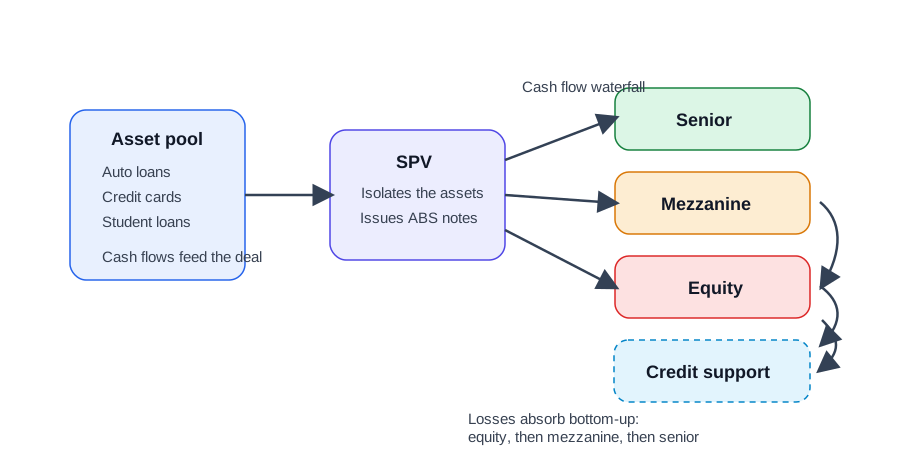
This diagram shows the cash-flow and loss-allocation logic that makes tranching useful: senior investors are paid first, while lower tranches absorb losses earlier.
Comparison with Mortgage-Backed Securities (MBS)
While both ABS and MBS involve securitization, they differ primarily in the type of underlying assets:
- ABS: Backed by non-mortgage assets like auto loans and credit card receivables.
- MBS: Specifically backed by mortgage loans.
Tranching of ABS
Tranching is a critical feature of ABS, allowing for the division of the security into different slices, or tranches, each with distinct risk and return profiles.
Types of Tranches
- Senior Tranche: Typically rated the highest, offering lower risk and lower returns. It has priority in receiving payments.
- Mezzanine Tranche: Offers moderate risk and return, positioned between senior and junior tranches.
- Junior/Equity Tranche: Carries the highest risk and potential return, absorbing losses first.
Benefits of Tranching
- Risk Allocation: Tranching allows investors to choose securities that match their risk tolerance.
- Enhanced Marketability: By catering to diverse investor preferences, ABS become more attractive in the market.
Credit Enhancements in ABS
Credit enhancements are mechanisms designed to improve the credit quality of ABS, making them more appealing to investors.
Types of Credit Enhancements
- Overcollateralization: More assets are included in the pool than necessary to cover the ABS, providing a cushion against defaults.
- Reserve Accounts: Cash reserves are set aside to cover potential shortfalls in payments.
- Third-Party Guarantees: External entities may provide guarantees to absorb losses up to a certain point.
Importance of Credit Enhancements
- Improved Credit Rating: Enhancements can lead to higher credit ratings, reducing the cost of borrowing for issuers.
- Increased Investor Confidence: By mitigating default risk, credit enhancements attract a broader investor base.
Real-World Examples of ABS
To illustrate the practical application of ABS, let’s explore some notable examples:
Auto Loan ABS
Auto loans are a common asset class for ABS. For instance, a major auto manufacturer might pool its car loans and issue ABS to investors, offering them a share in the revenue generated from loan repayments.
Credit Card Receivables ABS
Credit card companies frequently securitize their receivables. An example is a leading bank bundling its credit card debts into an ABS, allowing investors to benefit from the interest payments made by cardholders.
Student Loan ABS
Student loans have also been securitized, providing investors with exposure to the education financing sector. A prominent case involved a financial institution packaging its student loans into ABS, offering a stable income stream to investors.
Regulatory Considerations
In the U.S., ABS are subject to regulation by entities such as the Securities and Exchange Commission (SEC). Key regulations include:
- Securities Act of 1933: Governs the issuance and sale of ABS, ensuring transparency and investor protection.
- Dodd-Frank Act: Introduced risk retention requirements, mandating that issuers retain a portion of the credit risk to align their interests with investors.
Conclusion
Asset-Backed Securities play a vital role in financial markets by transforming illiquid assets into tradable securities. Through securitization, tranching, and credit enhancements, ABS offer investors a diversified and potentially lucrative investment opportunity. Understanding the intricacies of ABS is crucial for anyone looking to navigate the complexities of modern financial instruments.
Glossary
- Asset-Backed Security (ABS): A financial security backed by a pool of assets, typically consisting of receivables other than mortgages.
- Tranche: A piece, portion, or slice of a pool of securities, structured to divide risk or other characteristics.