Mutual Fund Pricing
How mutual fund share prices are calculated and presented to investors.
Mutual fund pricing is a classic Series 6 testing area because it combines product structure, basic math, and sales-practice awareness. The exam often checks whether the candidate understands what the customer is actually paying, what the fund itself is worth, and where the sales charge sits inside that relationship.
\[ \text{NAV} = \frac{\text{Assets} - \text{Liabilities}}{\text{Shares Outstanding}} \]\[ \text{POP} = \text{NAV} + \text{Sales Charge} \]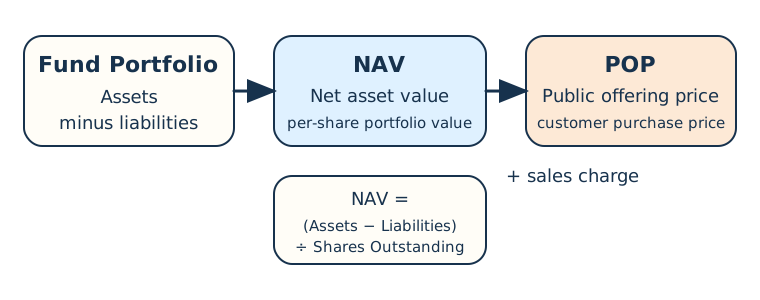
The chart above shows the relationship the exam wants you to see quickly: portfolio value becomes NAV, then customer-facing pricing may include a sales charge that produces the public offering price.
Pricing Terms That Must Stay Separate
| Term | What it means | Common mistake |
|---|---|---|
| NAV | per-share value of the portfolio after liabilities | confusing it with the customer’s purchase price |
| POP | price the customer pays for an open-end fund purchase | assuming it always equals NAV |
| sales charge | distribution charge added to or taken from the transaction structure | forgetting how it changes the effective cost |
Common Exam Pattern
The question stem gives enough information to compute NAV or POP, but the wrong choices assume the candidate forgot whether the load is added to the fund value or reflected differently in the pricing relationship. The safest approach is to identify the quantity being asked for before doing any math.
Key Takeaways
- Series 6 pricing questions usually test term separation before arithmetic.
- NAV describes fund value; POP describes customer purchase price.
- If a sales charge applies, the candidate must keep it conceptually separate from the underlying portfolio value.
In this section
- Net Asset Value (NAV)How NAV is calculated and why it matters in mutual fund pricing.
- Public Offering Price (POP)How the public offering price reflects NAV and applicable sales charges.